Electric Wheelchair Controller Fatigue Testing Machine
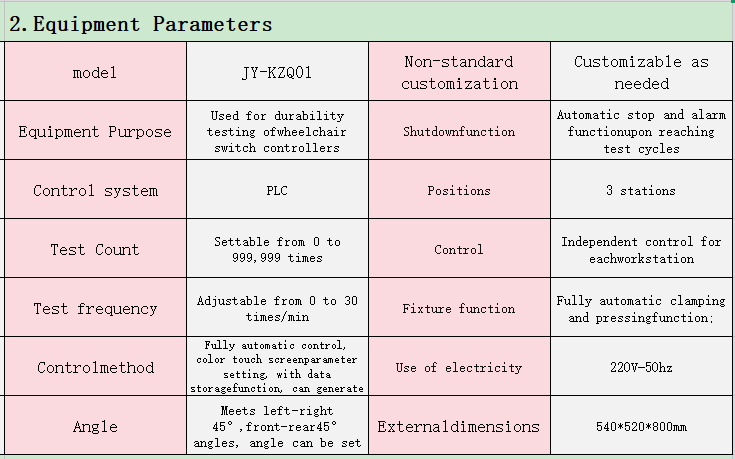
An electric wheelchair controller fatigue testing machine for cyclic durability testing of electric wheelchair controller joysticks, buttons, and parking switches, in line with GB/T 18029.14, ISO 7176-14, and GB/T 12996. It uses PLC touchscreen control to let users set oscillation angle, test frequency, and cycle count, supports independent multi-station testing with real-time electrical on/off monitoring, and includes automatic shutdown, alarm functions, and data storage for report generation.
- Categories:Vehicle testing equipment
An electric wheelchair controller fatigue testing machine for cyclic durability testing of electric wheelchair controller joysticks, buttons, and parking switches, in line with GB/T 18029.14, ISO 7176-14, and GB/T 12996. It uses PLC touchscreen control to let users set oscillation angle, test frequency, and cycle count, supports independent multi-station testing with real-time electrical on/off monitoring, and includes automatic shutdown, alarm functions, and data storage for report generation.
An electric wheelchair controller fatigue testing machine for cyclic durability and fatigue testing of electric wheelchair controller joysticks, buttons, and parking switches. It complies with the GB/T 18029.14, ISO 7176-14, and GB/T 12996 standards. The unit features a PLC touchscreen control system, enabling operators to set the oscillation angle, test frequency, and number of cycles. It supports independent testing across multiple stations, provides real-time monitoring of electrical on/off status, and includes automatic shutdown and alarm functions. Test data can be stored for report generation. The machine is suitable for use in rehabilitation assistive-device laboratories and for quality inspection and certification testing at wheelchair manufacturing facilities.
Understanding the Electric Wheelchair Controller Fatigue Testing Machine
In the rapidly evolving field of assistive technologies, the need for reliable and efficient systems is at an all-time high. With an aging population and growing emphasis on mobility solutions, it is essential to ensure that electric wheelchairs deliver optimal performance. The Electric Wheelchair Controller Fatigue Testing Machine addresses this challenge by providing valuable insights into the durability and reliability of wheelchair control systems. This machine plays a critical role in improving user safety and comfort—particularly in today’s market, where quality assurance is non-negotiable. In this article, we outline its key benefits, core features, and how it helps advance industry quality standards.

Key Benefits of the Testing Machine
A major advantage of the Electric Wheelchair Controller Fatigue Testing Machine is its ability to simulate real-world conditions. By replicating the stresses and strains experienced during everyday use, it helps manufacturers generate data that supports product design improvements. As a result, durability is enhanced—helping companies reduce costs, returns, and warranty claims associated with less reliable products. In addition, shorter development cycles enable faster time-to-market, supporting stronger competitiveness and market capture.
Furthermore, the machine supports compliance with global standards, helping ensure that products meet applicable safety requirements. For example, when fatigue testing is incorporated into a company’s quality assurance process, products can be marketed with confidence in terms of safety and reliability. In one documented case, a manufacturer improved the safety features of its wheelchair model following fatigue testing, resulting in a 40% reduction in reported incidents related to controller failures. This strengthens the company’s reputation and improves customer trust.
Another key benefit is the flexibility to tailor test parameters to specific user needs and environmental conditions. Different regions may follow different requirements; for instance, a wheelchair intended for rugged terrain will be tested differently from one designed for city use. This adaptability helps manufacturers address diverse markets and enhances global competitiveness.
Pro Tip: Integrate the Electric Wheelchair Controller Fatigue Testing Machine into your design phase. By identifying potential design weaknesses early, you can reduce both cost and lead time, enabling a more robust product launch.
Product Focus: Electric Wheelchair Controller Fatigue Testing Machine
The Electric Wheelchair Controller Fatigue Testing Machine is designed to rigorously test components used in electric wheelchairs. It uses advanced sensors to monitor controller performance under a range of loads and conditions. The materials used in its construction are durable and wear-resistant, ensuring that the testing system can handle extended test cycles. This robustness is essential for manufacturers that need confidence in long-term product performance.
In addition, the machine can simulate multiple usage scenarios, such as sudden stops and starts—conditions commonly encountered in real operating environments. This capability helps manufacturers refine wheelchair designs, ensuring that products are not only functional but also safe for users. One customer reported that their wheelchair model improved significantly after incorporating insights from fatigue testing, leading to higher user satisfaction and fewer service calls.
Comparison of Testing Methods
When assessing testing approaches for electric wheelchair controllers, it is important to compare traditional mechanical testing with fatigue testing. Traditional methods typically emphasize static measurements, while fatigue testing provides insight into performance over time. The table below compares these two methodologies, highlighting key differences and their implications for manufacturers.
From this comparison, it is clear that fatigue testing offers a more comprehensive understanding of how products will perform in the field. While traditional methods may be sufficient for initial checks, they cannot predict long-term reliability as effectively as fatigue testing. Manufacturers seeking to improve products and customer satisfaction should prioritize fatigue testing within their quality assurance programs.
Technical Insights into Testing Methodologies
The Electric Wheelchair Controller Fatigue Testing Machine uses advanced technology to accurately simulate real-world usage. By employing high-precision sensors and data analytics, it measures not only the functional performance of the wheelchair controller but also its endurance under stress. For example, the collected data can indicate how long the controller can operate under varying loads without failure. This supports design improvements based on empirical evidence rather than assumptions.
In addition, as materials technology advances, new materials are increasingly used in wheelchair manufacturing. Understanding how these materials behave under stress is essential. The testing machine provides insights that help manufacturers select the most suitable components to support longevity and safety. As industry trends shift toward lightweight yet durable materials, this machine plays a key role in guiding design decisions aligned with market demands.

Conclusion: The Future of Wheelchair Testing
In conclusion, the Electric Wheelchair Controller Fatigue Testing Machine enhances product reliability and supports innovation in wheelchair design. By prioritizing robust testing, manufacturers can help ensure their products meet high standards of safety and performance. As the industry continues to evolve, adopting these capabilities will be critical to long-term success. Visit to learn more and begin improving your product quality today.
Frequently Asked Questions (FAQs)
What is the purpose of the Electric Wheelchair Controller Fatigue Testing Machine?
The Electric Wheelchair Controller Fatigue Testing Machine is designed to simulate real-world usage of wheelchair controllers and evaluate durability and performance under a variety of conditions. This helps manufacturers verify that their products are safe, reliable, and aligned with applicable industry standards.
How does fatigue testing differ from traditional testing methods?
Fatigue testing evaluates long-term performance under repeated stress, while traditional methods typically assess only static conditions. As a result, fatigue testing provides deeper insight into how products behave during everyday use, supporting improved design and safety outcomes.
Can manufacturers customize testing parameters?
Yes. Manufacturers can customize testing parameters based on specific user needs and environmental conditions. This flexibility enables tailored test solutions that better reflect the challenges faced in different markets.
What are the key benefits of using this testing machine?
Key benefits include improved product durability, stronger alignment with safety standards, and the ability to customize testing for different market needs. Ultimately, this supports higher customer satisfaction and helps reduce costs associated with product failures.