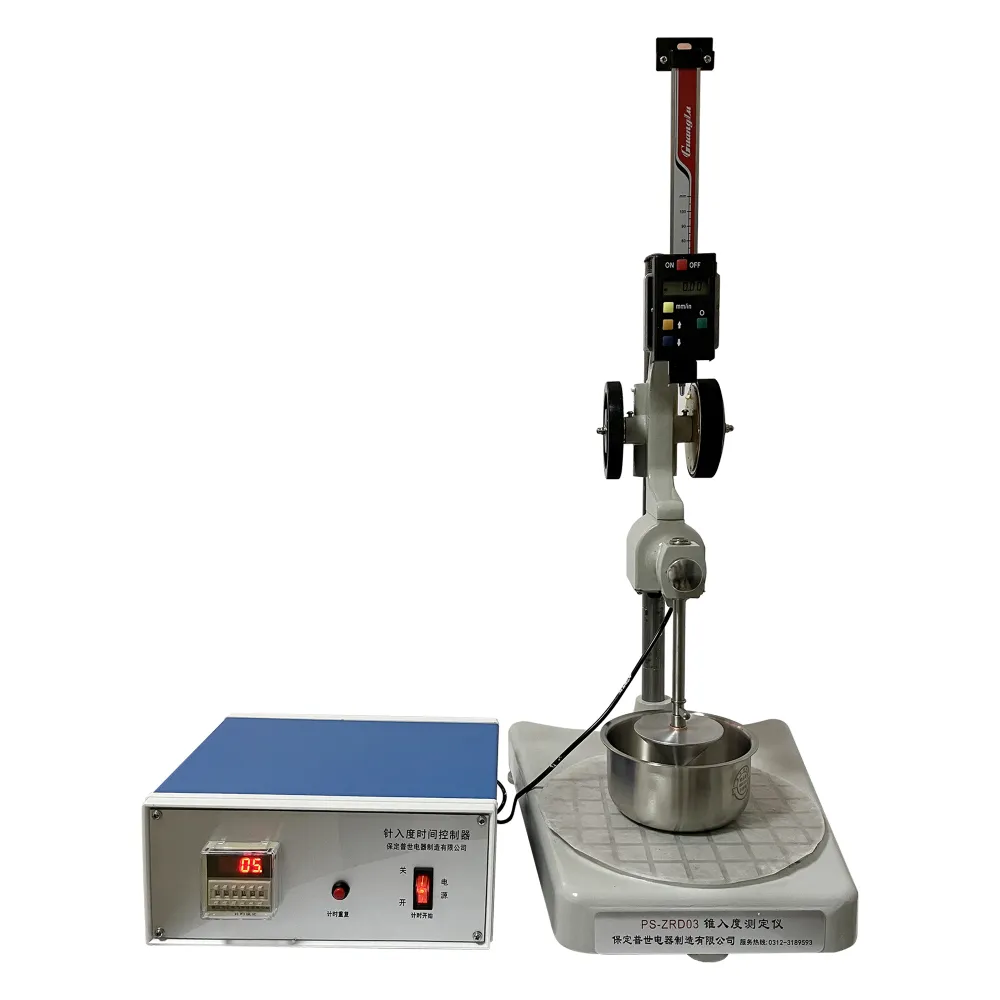
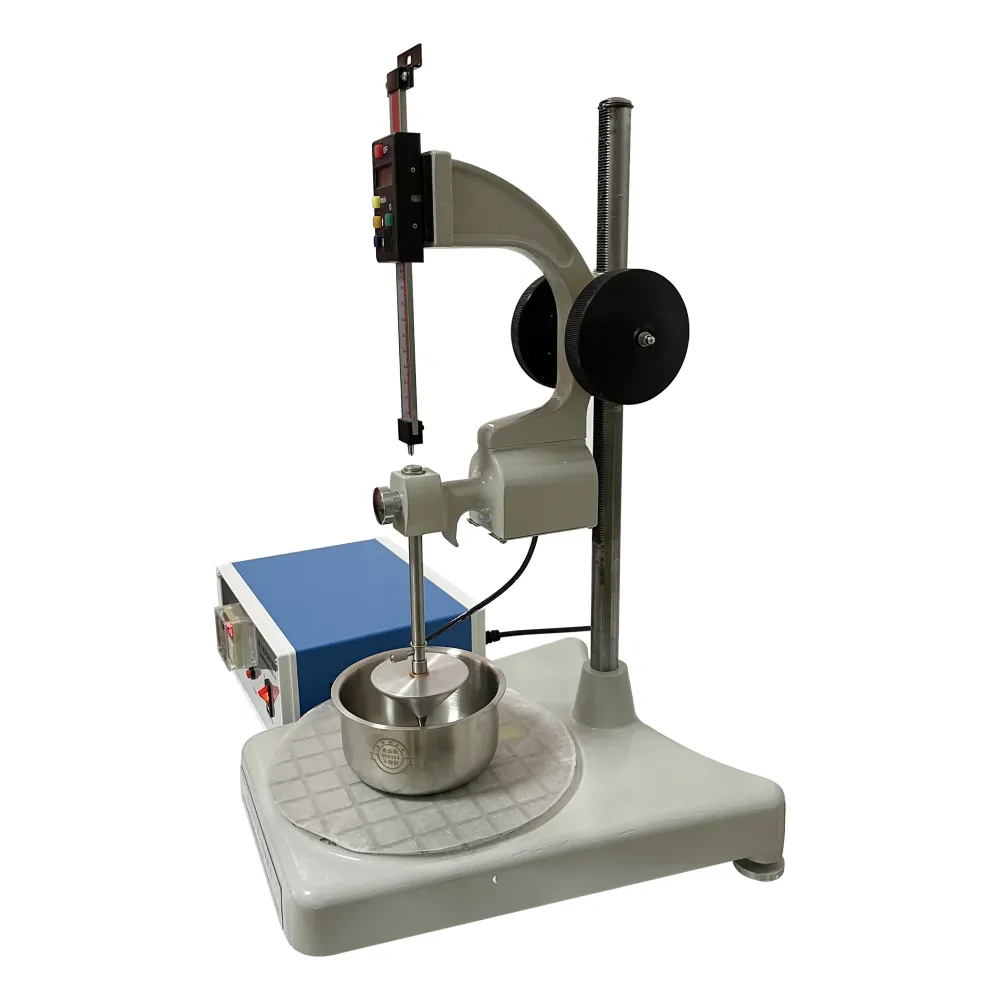
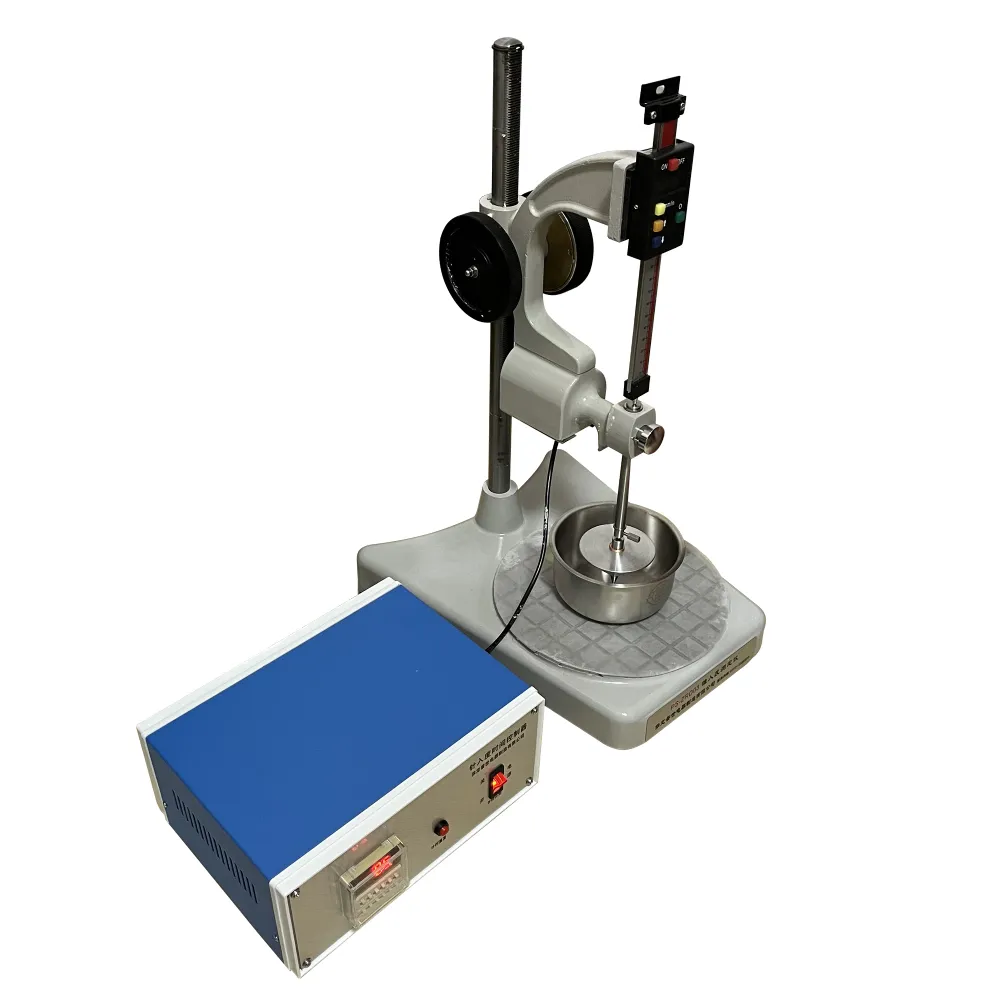
PS-ZRD03 astm d217 Lubricating Grease Cone Lubricity Oil Penetration Tester Penetrometer
This instrument is designed and manufactured in accordance with GB/T 269 for measuring the penetration of lubricating greases and petroleum greases. It can be fitted with the relevant standard needles for material testing of solid fine particles, powder, colloid, frozen matter, and for inspecting cheese, sugar gum, butter, fermented material, and other food raw materials. It is also suitable for ISO 2137-85, ASTM D217-82, and IP 50-79 for determining grease penetration.
- Categories:Grease Tester
This instrument is designed and manufactured in accordance with GB/T 269 for measuring the penetration of lubricating greases and petroleum greases. It can be fitted with the relevant standard needles for material testing of solid fine particles, powder, colloid, frozen matter, and for inspecting cheese, sugar gum, butter, fermented material, and other food raw materials. It is also suitable for ISO 2137-85, ASTM D217-82, and IP 50-79 for determining grease penetration.
- The Cone Penetration Tester for Lubricating Grease, also known as a Grease Cone Penetrometer, is a specialized instrument used to determine the consistency and penetration depth of lubricating greases under standardized conditions. It assesses the hardness or softness of the grease, which is essential for evaluating its suitability for a wide range of applications and for ensuring optimal performance in machinery and equipment.
- Quality Control: Used by lubricant manufacturers and quality control laboratories to evaluate the consistency and performance of lubricating greases, supporting compliance with industry standards and customer specifications.
- Product Development: Helps formulate and develop lubricating greases with the required consistency, viscosity, and penetration characteristics for specific applications and operating conditions.
- - Machinery Maintenance: Used by maintenance technicians and engineers to monitor the condition of lubricating greases in machinery and equipment, identifying changes in consistency that may indicate degradation or contamination.
- Grease Selection: Supports choosing the appropriate grade or type of lubricating grease based on its penetration characteristics and operating requirements, including temperature, load, and speed.
- Equipment Lubrication: Helps ensure correct lubrication of machinery components such as bearings, gears, and seals by verifying that the applied grease has the appropriate consistency for optimal performance and durability.
- - Performance Evaluation: Assists in assessing the effectiveness of lubricating greases in reducing friction, wear, and corrosion in mechanical systems, thereby helping extend equipment service life and minimize downtime.
The Cone Penetration Tester for lubricating grease comprises a standardized, cone-shaped penetrometer probe attached to a calibrated rod or shaft. The probe is driven vertically into a sample of lubricating grease at a controlled rate, and the penetration depth is measured and recorded. Penetration depth reflects grease consistency and firmness: softer greases typically produce greater penetration depths, while harder greases result in lower penetration depths. The test results provide valuable insights into the rheological properties of lubricating greases, including resistance to deformation, shear stability, and structural integrity. This information helps lubricant manufacturers, end users, and maintenance professionals ensure reliable performance in lubricated machinery and equipment.
Penetration display | LCD digital display, resolution 0.01 mm (0.1 cone penetration) |
Maximum sounding depth | Greater than 620 cone penetration |
Timer setting range | 0–99 seconds ±0.1 seconds |
Instrument power supply | 220 V ± 22 V, 50 Hz ± 1 Hz |
Cone penetration display battery | LR44H button battery |