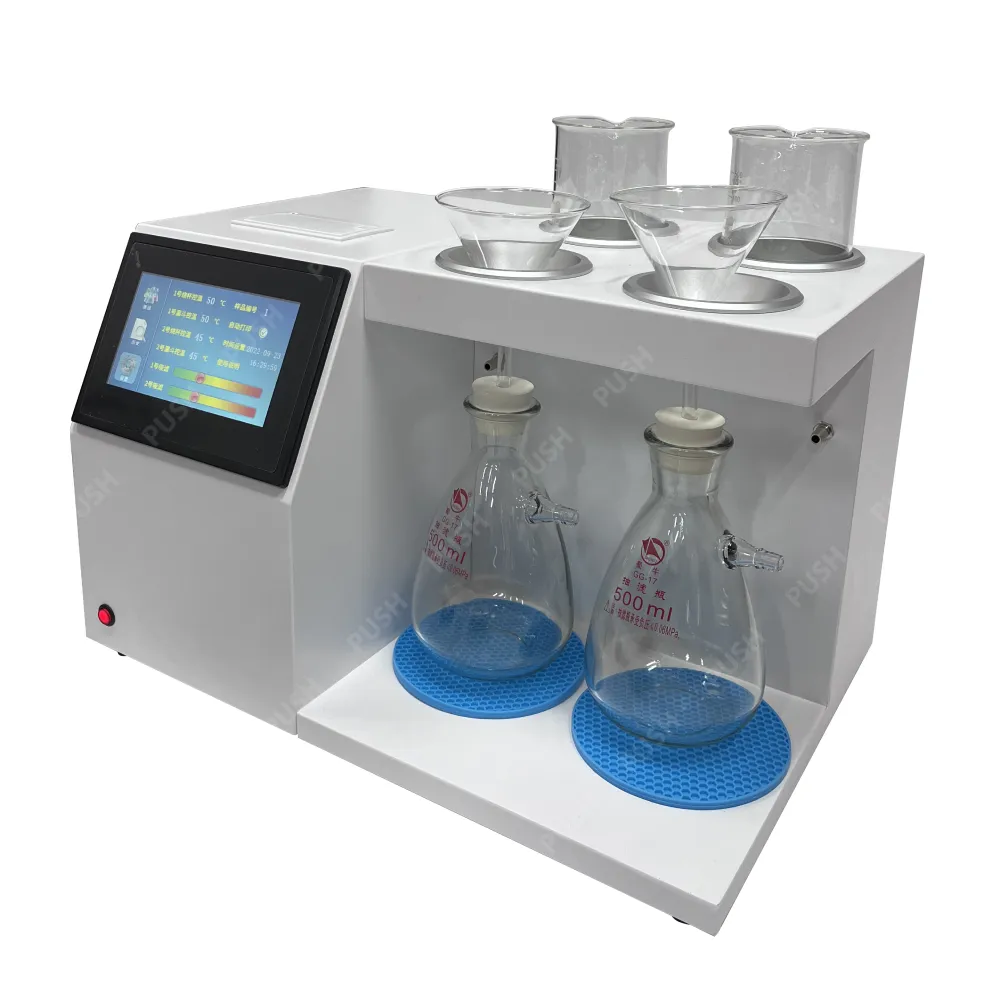
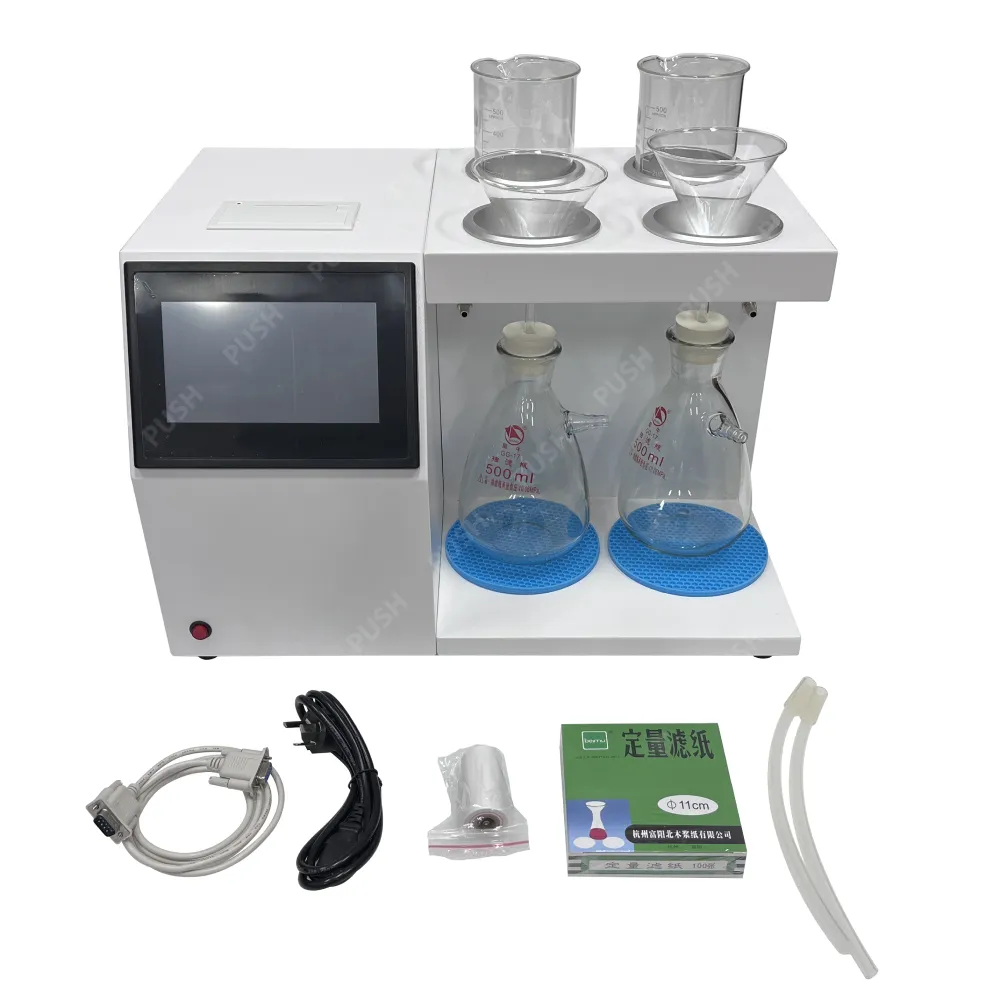
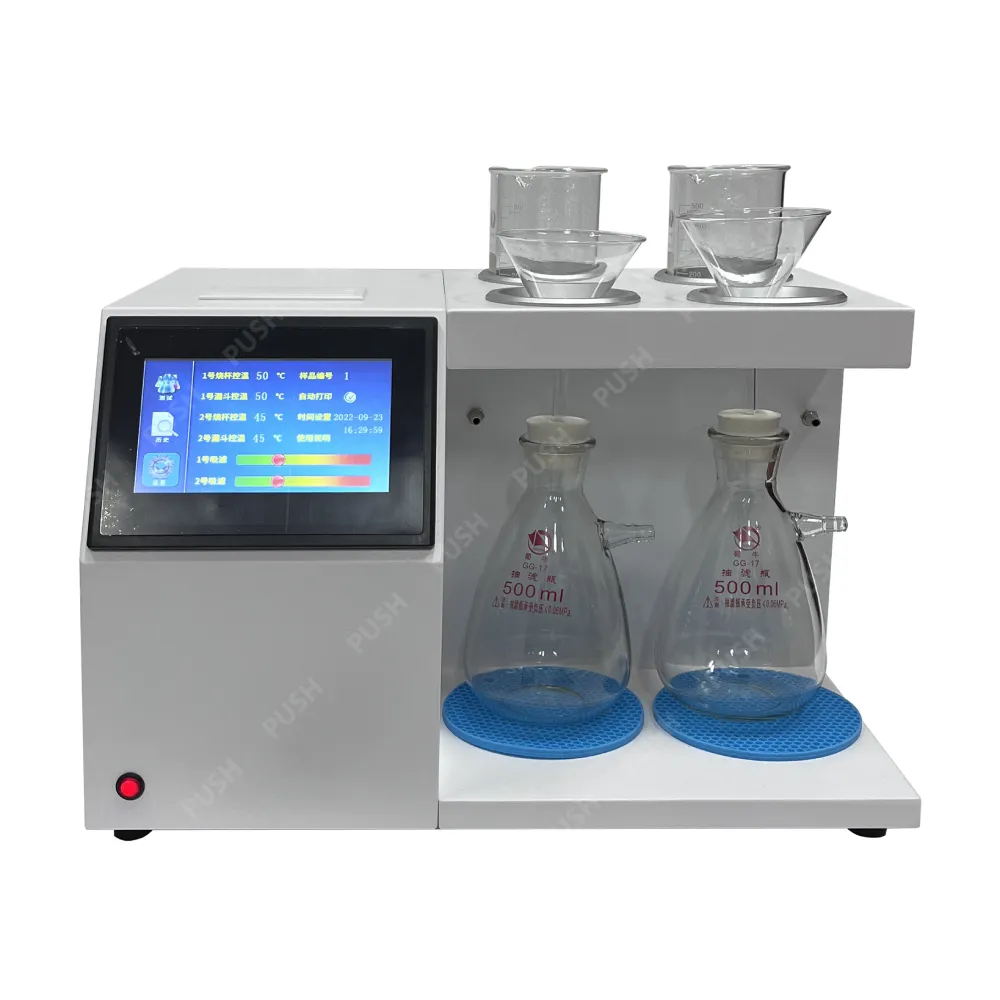
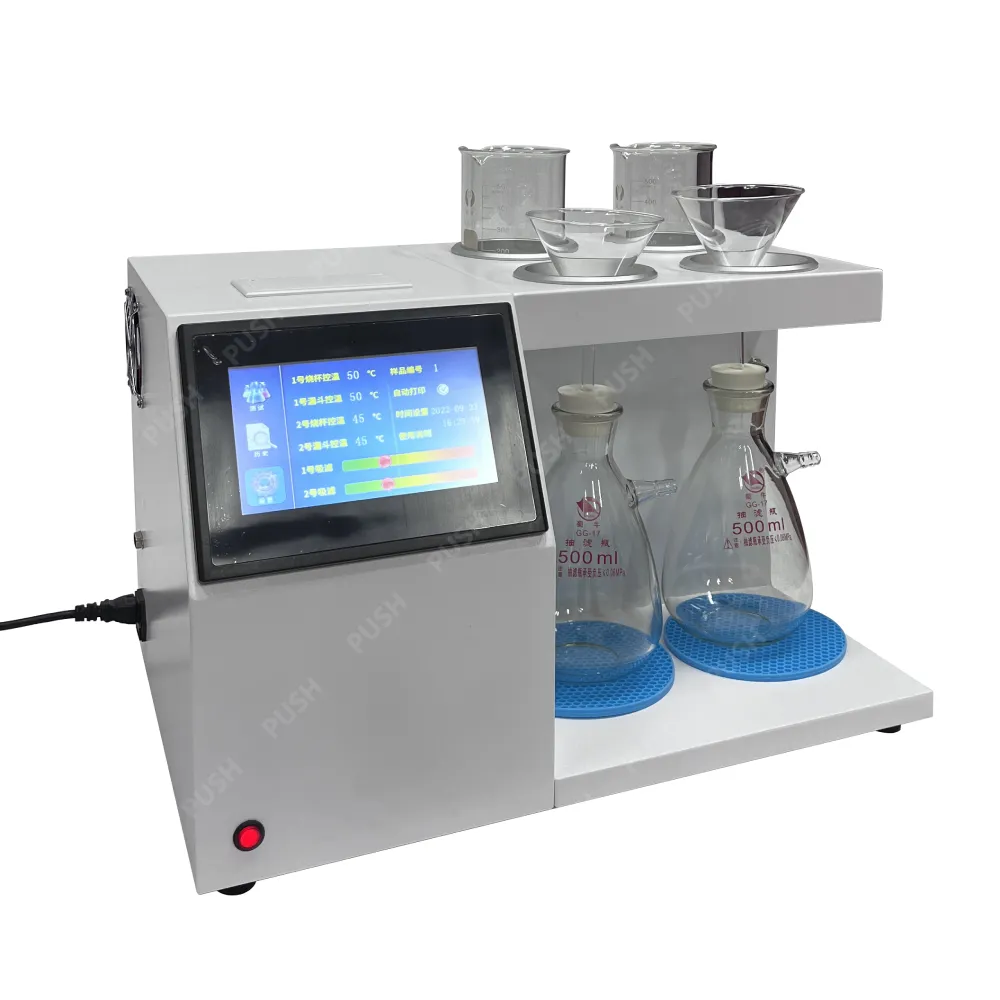
PS-JZ001 Mechanical Impurity Tester For Petroleum Products
The Mechanical Impurities Tester extracts an oil sample and filters it through a fine mesh or membrane to retain solid particles and contaminants while clean oil passes through. The residue retained on the filter is measured quantitatively to assess the mechanical impurities content in the oil. The results help operators and manufacturers verify the cleanliness and integrity of petroleum products, supporting equipment performance, reliability, and service life.
- Categories:Oil Test Equipment
The Mechanical Impurities Tester extracts an oil sample and filters it through a fine mesh or membrane to retain solid particles and contaminants while clean oil passes through. The residue retained on the filter is measured quantitatively to assess the mechanical impurities content in the oil. The results help operators and manufacturers verify the cleanliness and integrity of petroleum products, supporting equipment performance, reliability, and service life.
- 1. Seven-inch touch screen with waterproof panel
2. Four-way metal bath with funnel heating and beaker heating
3. Two-way vacuum filtration
4. Dedicated PID temperature control program
5. Program-controlled decompression suction filtration
6. Maintenance-free vacuum pump for worry-free operation
7. Readout of balance data directly
Introduction to the Mechanical Impurities Tester:
The Mechanical Impurities Tester is a specialized instrument for determining the mechanical impurities content in petroleum products, such as lubricating oils, fuels, and hydraulic fluids. Mechanical impurities refer to solid particles, debris, or other contaminants present in the oil that can affect performance and service life.
Lubricating Oil Industry: Used for quality control and assessment of lubricating oils to ensure they meet cleanliness requirements and performance standards.
Fuel Industry: Used to evaluate the cleanliness of fuels, including diesel, gasoline, and biodiesel, helping prevent engine damage and fuel system fouling.
Hydraulic Systems: Key for monitoring the cleanliness of hydraulic fluids to help prevent wear and damage to hydraulic components and systems.
Petrochemical Industry: Used to assess the cleanliness of various petroleum-based products, including base oils, gear oils, and turbine oils.
Quality Assurance: Helps ensure petroleum products meet cleanliness specifications and standards, reducing the risk of equipment malfunctions, component wear, and system failures.
Preventive Maintenance: Supports early detection of potential issues by identifying excessive mechanical impurities, enabling timely maintenance and replacement of contaminated oils.
Condition Monitoring: Enables ongoing monitoring of oil cleanliness levels in critical equipment and systems for proactive maintenance and troubleshooting.
Research and Development: Used in laboratories and research facilities to study the effects of operating conditions, filtration methods, and additives on mechanical impurities in oils—supporting the development of cleaner, more efficient lubricants and fuels.
|
Display |
7-inch LCD display |
|
Temperature control range |
Room temperature ~ 100 ℃ (reference) |
|
Temperature control accuracy |
±0.1 °C |
|
Resolution |
0.1 °C |
|
Rated power |
800 W |
|
Dimensions |
520 × 350 × 340 mm |