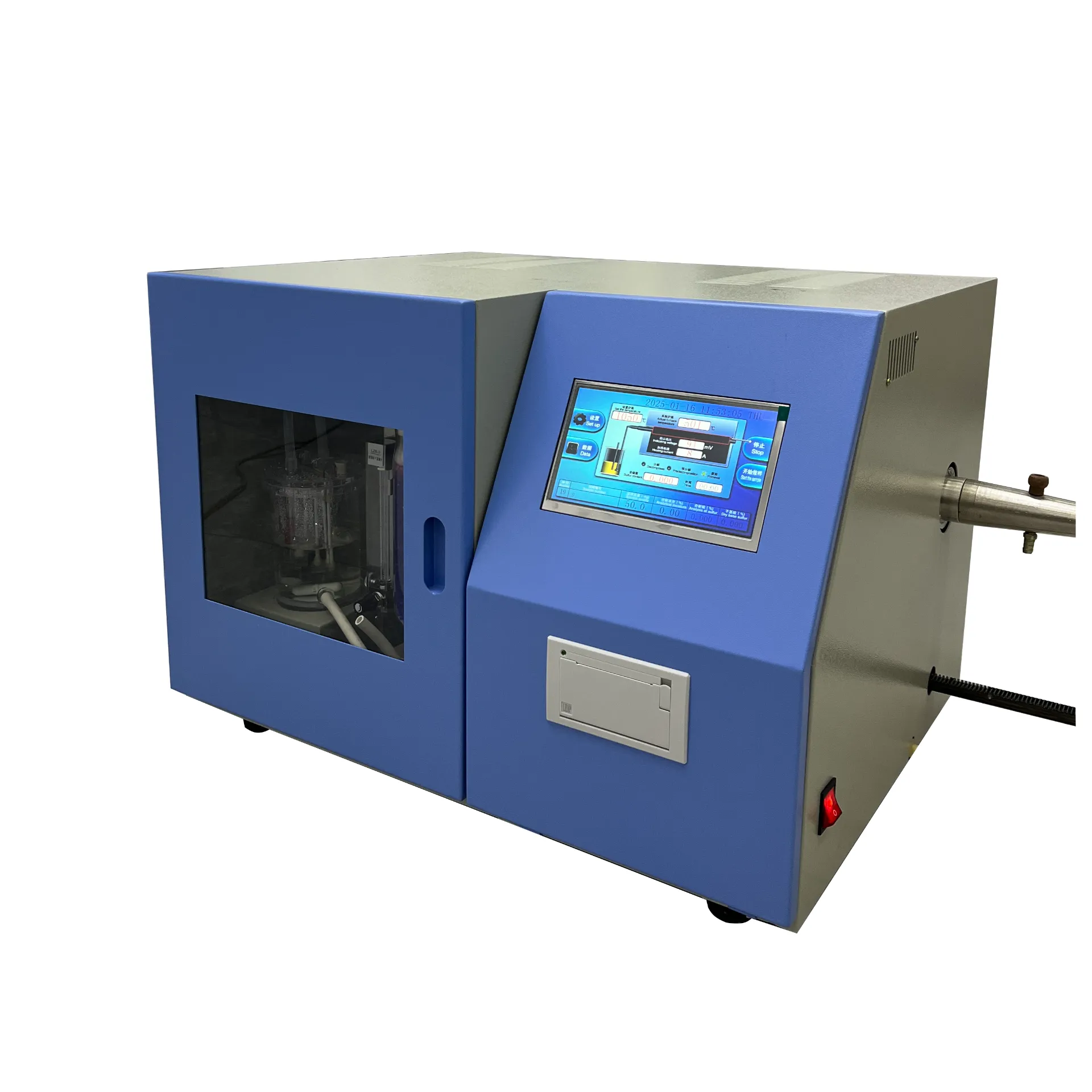
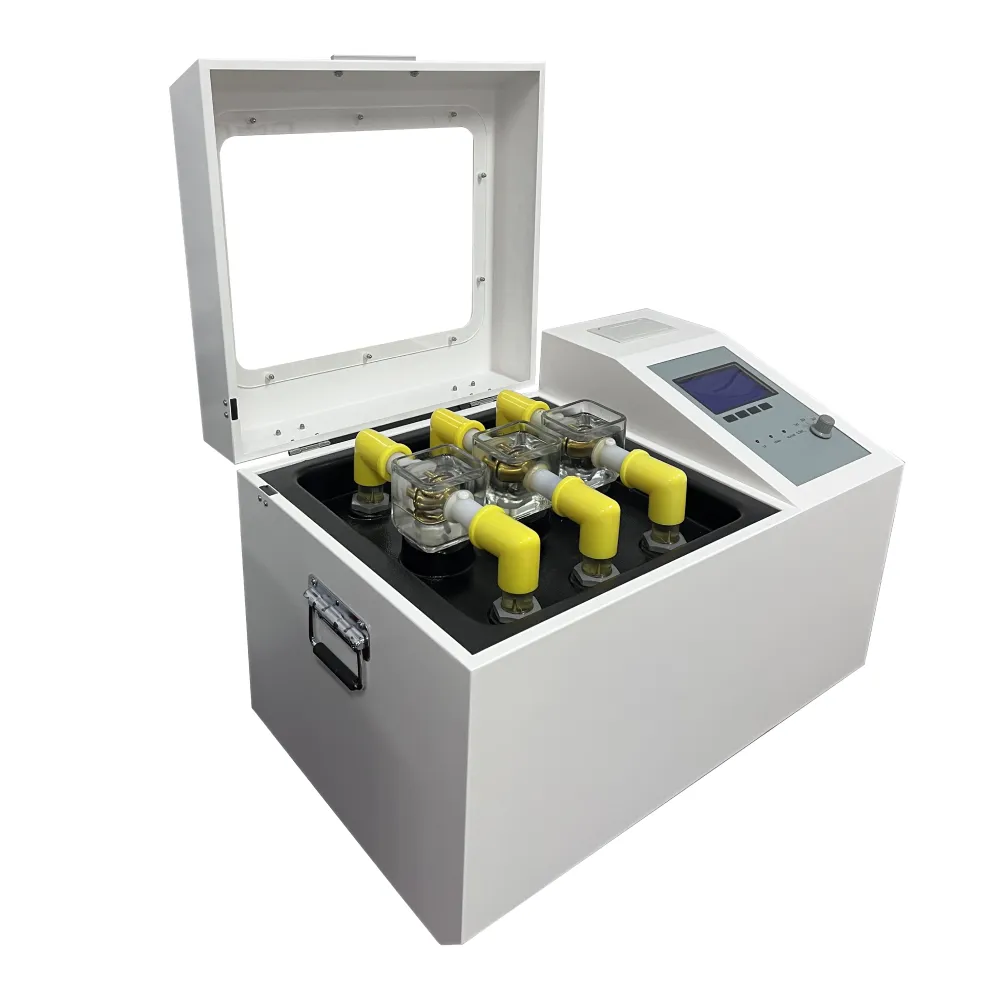
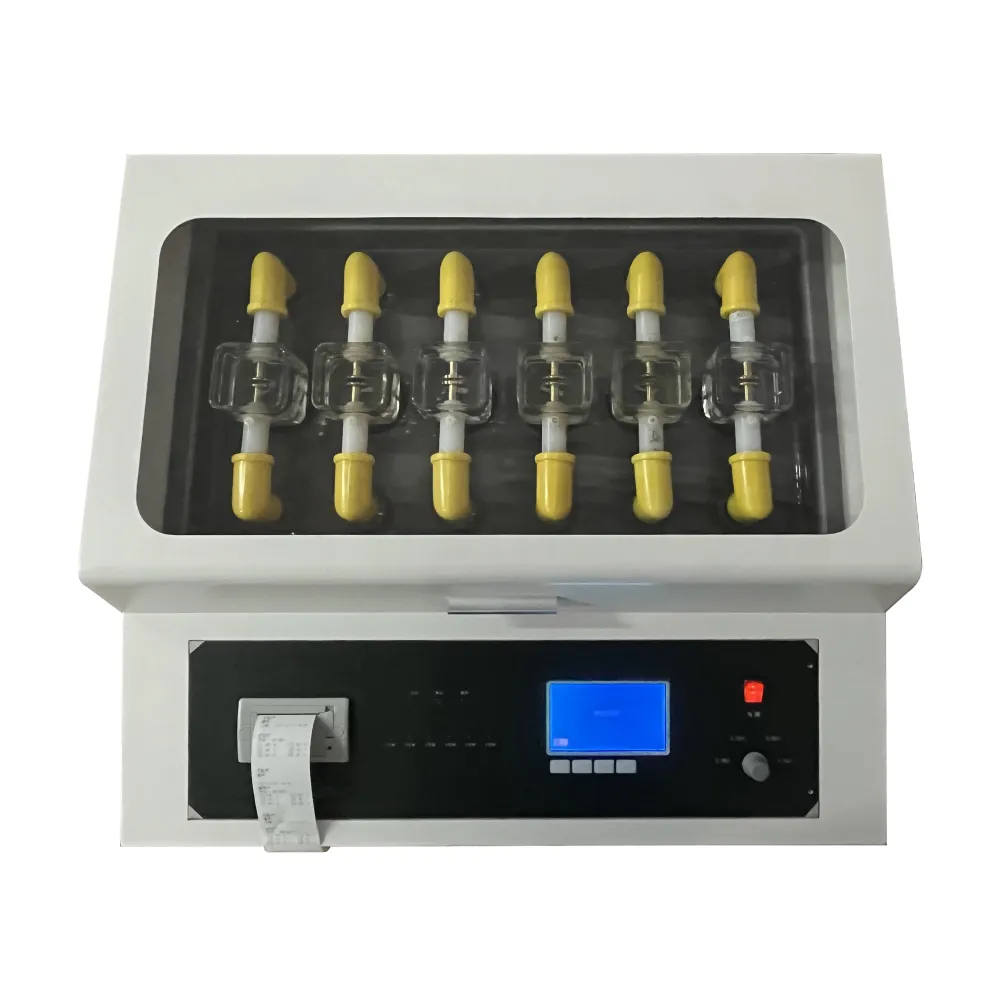
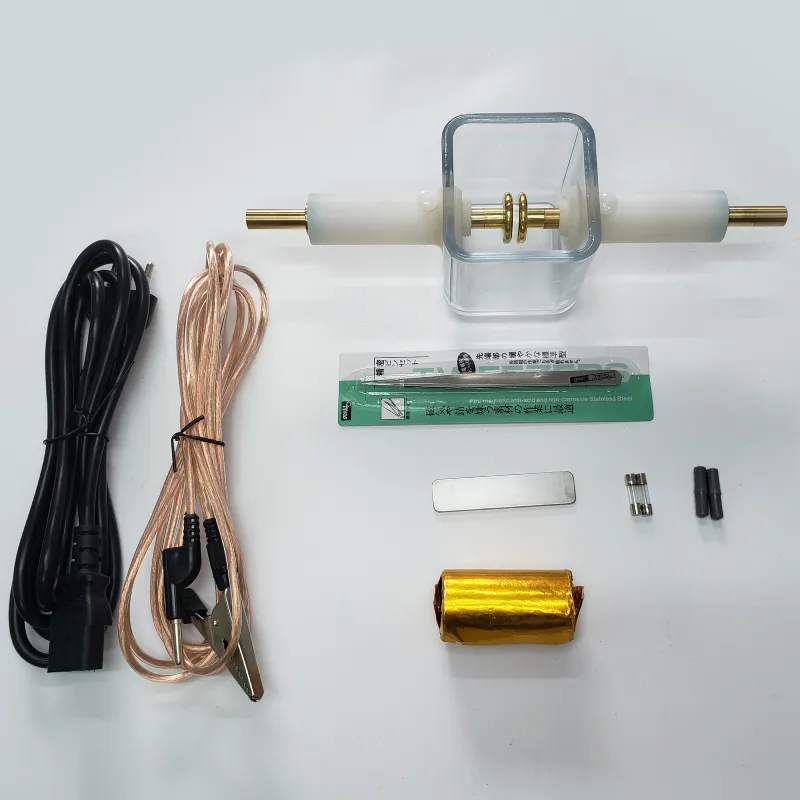
Ps-Zj002 Determination Of Oil Sludge Petroleum Products Mechanical Impurity Tester
Oil-free, maintenance-free vacuum pump with a thermostatic metal bath funnel. An all-in-one instrument host provides all functions without an external vacuum pump or water bath. Designed for energy saving and environmental protection.
- Categories:Oil Test Equipment
Oil-free, maintenance-free vacuum pump with a thermostatic metal bath funnel. An all-in-one instrument host provides all functions without an external vacuum pump or water bath. Designed for energy saving and environmental protection.
- 1.3-inch TFT true-color touch screen with a resolution of 480×272 for an intuitive and user-friendly human-machine interface.
2. Built around a 32-bit microprocessor as the main control core and a new-generation intelligent operating system.
3. PID temperature control for precise temperature regulation of the constant-temperature funnel.
4. Built-in oil-free, maintenance-free vacuum pump; vacuum filtration is controlled by the program.
5. Specially designed vacuum pump structure: even if an oil sample is drawn into the vacuum pump, it will not damage the instrument and helps reduce accidental losses.
6. Compact design—desktop footprint is only about 1.4 sheets of A4 paper.
Introduction to the Mechanical Impurities Tester:
The Mechanical Impurities Tester is a specialized instrument for determining the mechanical impurities content in petroleum products, including lubricating oils, fuels, and hydraulic fluids. Mechanical impurities are solid particles, debris, or other contaminants present in the oil that can affect performance and service life.
- Lubricating Oil Industry: Used for quality control and assessment to ensure lubricating oils meet cleanliness requirements and performance standards.
- Fuel Industry: Used to evaluate fuel cleanliness, including diesel, gasoline, and biodiesel, helping to prevent engine damage and fuel system fouling.
- Hydraulic Systems: Essential for monitoring hydraulic fluid cleanliness to prevent wear and damage to hydraulic components and systems.
- Petrochemical Industry: Used to assess the cleanliness of various petroleum-based products, including base oils, gear oils, and turbine oils.
- Quality Assurance: Helps ensure petroleum products comply with cleanliness specifications and standards, reducing equipment malfunctions, component wear, and system failures.
- Preventive Maintenance: Detects excessive mechanical impurities to identify potential issues early, enabling timely maintenance and replacement of contaminated oils.
- Condition Monitoring: Enables continuous monitoring of oil cleanliness levels in critical equipment and systems to support proactive maintenance and troubleshooting.
- Research and Development: Used in laboratories and research facilities to study the impact of operating conditions, filtration methods, and additives on mechanical impurities in oils—supporting the development of cleaner, more efficient lubricants and fuels.
The Mechanical Impurities Tester operates by extracting an oil sample and filtering it through a fine mesh or membrane. Solid particles and contaminants in the oil are retained by the filter, while clean oil passes through. The quantity of residue retained on the filter is then measured quantitatively, providing an accurate determination of the mechanical impurities content. This information helps operators and manufacturers verify the cleanliness and integrity of petroleum products, thereby optimizing equipment performance, reliability, and service life.
Standard reference | DL/T 429.7-2017 |
Display | 4.3-inch liquid crystal display (LCD) |
Temperature control range | Room temperature to 100℃ |
Temperature control accuracy | ±1℃ (reference value) |
Resolution | 0.1℃ |
Rated power | Rated power |
Size | 300×300×400 mm |
Weight | 8 kg |