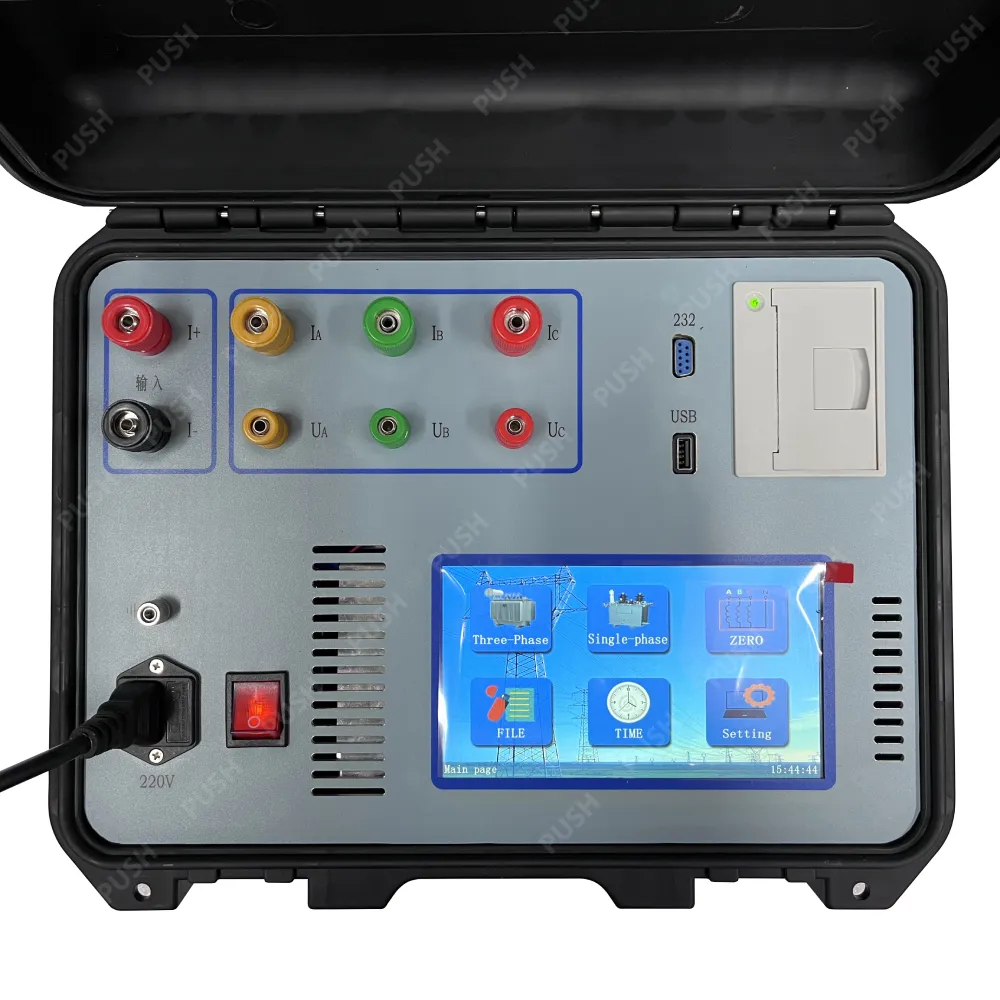
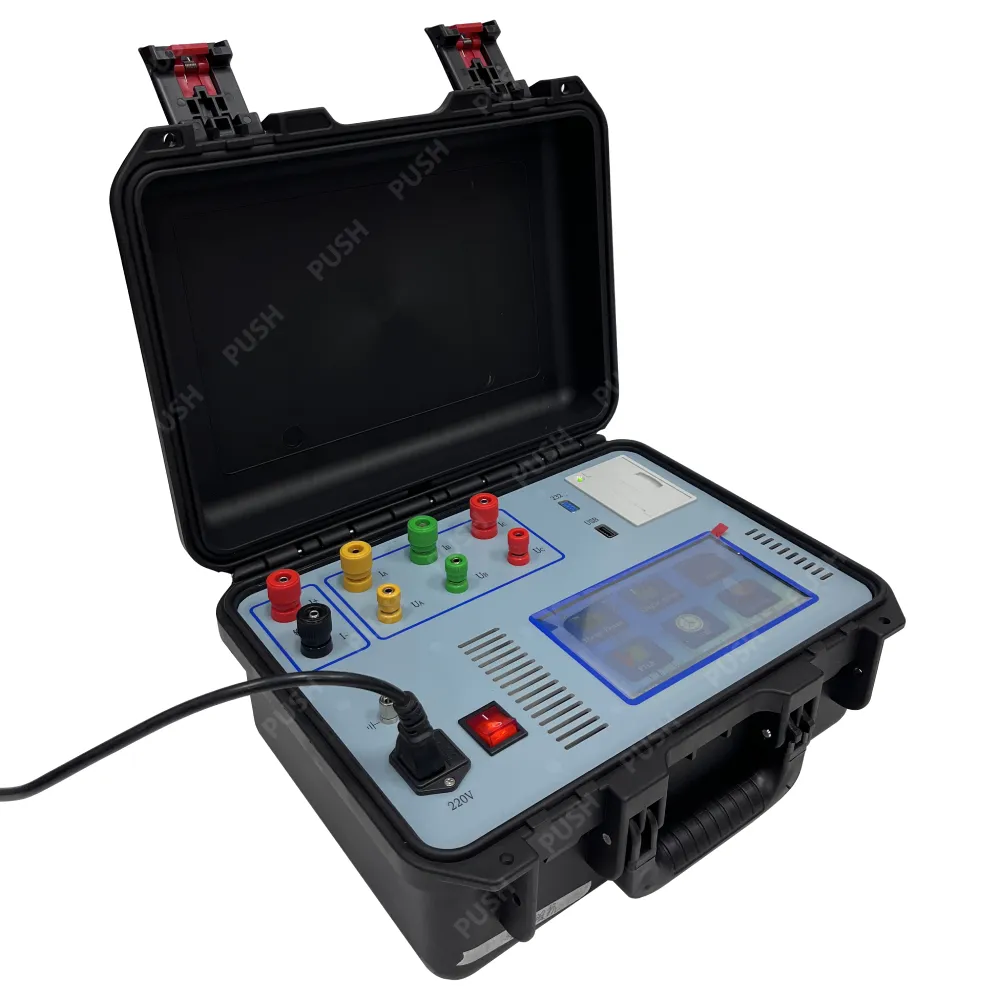
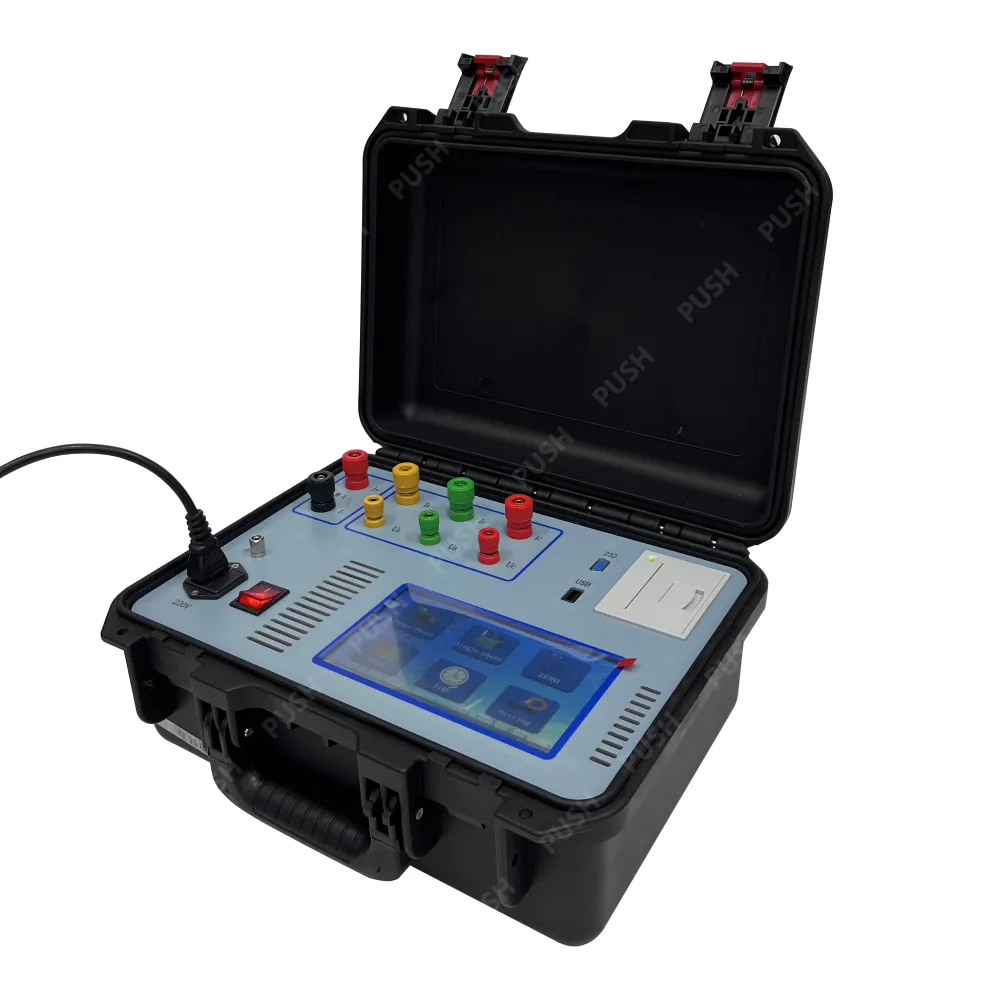
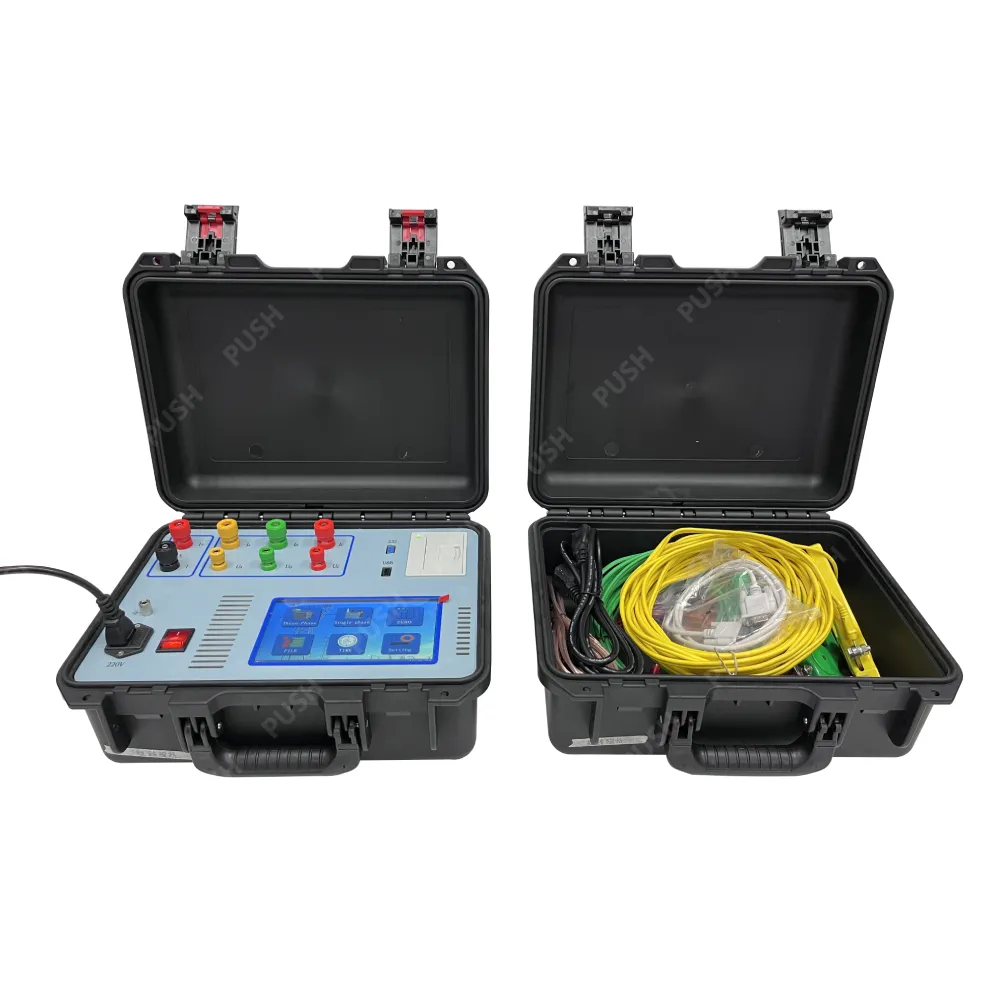
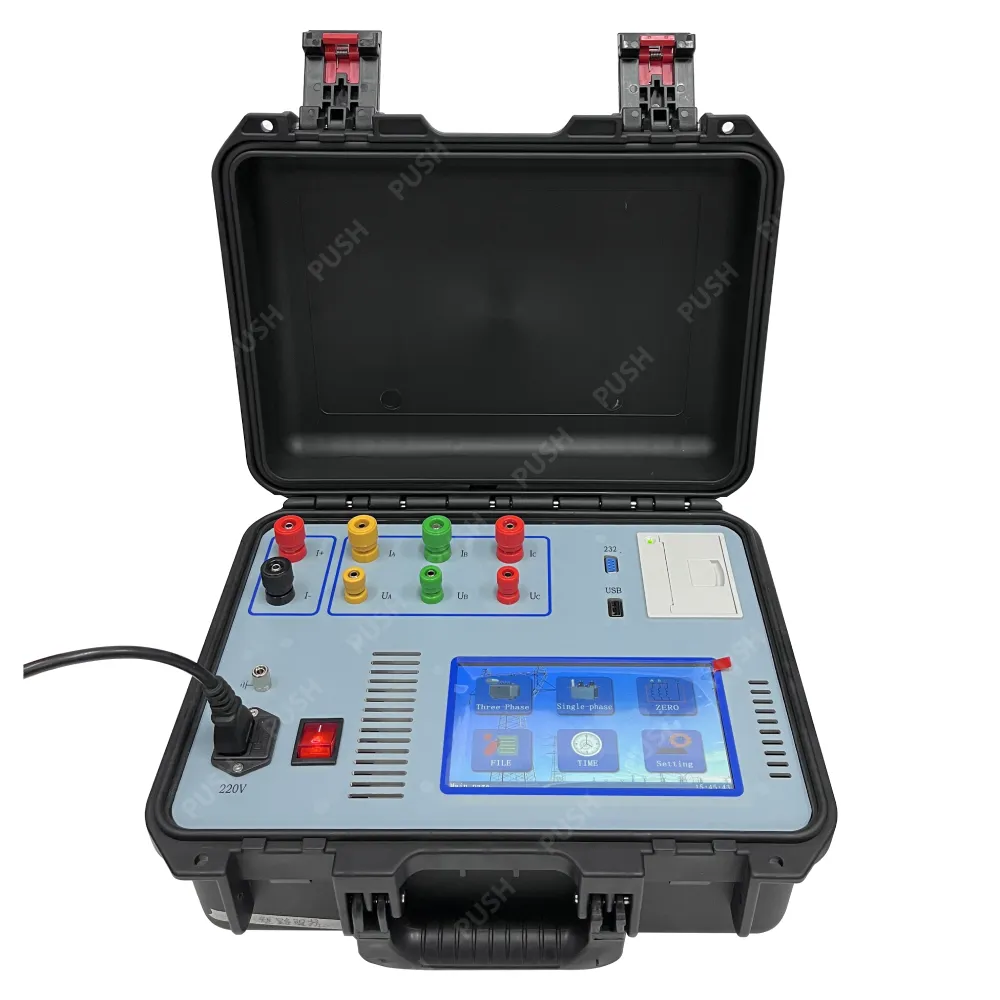
PS-ZK03 Transformer Short Circuit Impedance Tester
Short-circuit impedance is a key parameter for transformers, and the traditional short-circuit impedance method is used to assess winding deformation. Per GB1094.5-2003 and IEC 60076-5:2000, winding deformation is judged by the variation of short-circuit reactance only; the low-voltage short-circuit impedance test is the most direct way to check for deformation after a short-circuit current event during operation or mechanical impact during transportation and installation, and it supports decisi
- Categories:Transformer Test
Short-circuit impedance is a key parameter for transformers, and the traditional short-circuit impedance method is used to assess winding deformation. Per GB1094.5-2003 and IEC 60076-5:2000, winding deformation is judged by the variation of short-circuit reactance only; the low-voltage short-circuit impedance test is the most direct way to check for deformation after a short-circuit current event during operation or mechanical impact during transportation and installation, and it supports decisi
-
Measurement of three-phase short-circuit impedance:
Displays three-phase voltage, three-phase current, and three-phase power. Automatically calculates the percentage of impedance voltage converted to the transformer’s rated temperature and rated current, and the percentage error against the nameplate impedance. -
Measurement of single-phase short-circuit impedance:
Measures the short-circuit impedance of a single-phase transformer. -
Measurement of zero-sequence impedance:
Zero-sequence impedance measurement is suitable for transformers with a neutral point in a star (Y) connection on the high-voltage side. -
External CT/VT measurement support:
Measurement can be performed directly within the instrument’s allowable measurement range. External voltage and current transformers can be connected outside the measurement range. The instrument can set the transformation ratios of the external voltage and current transformers and directly display the applied voltage and current values. -
User-friendly interface:
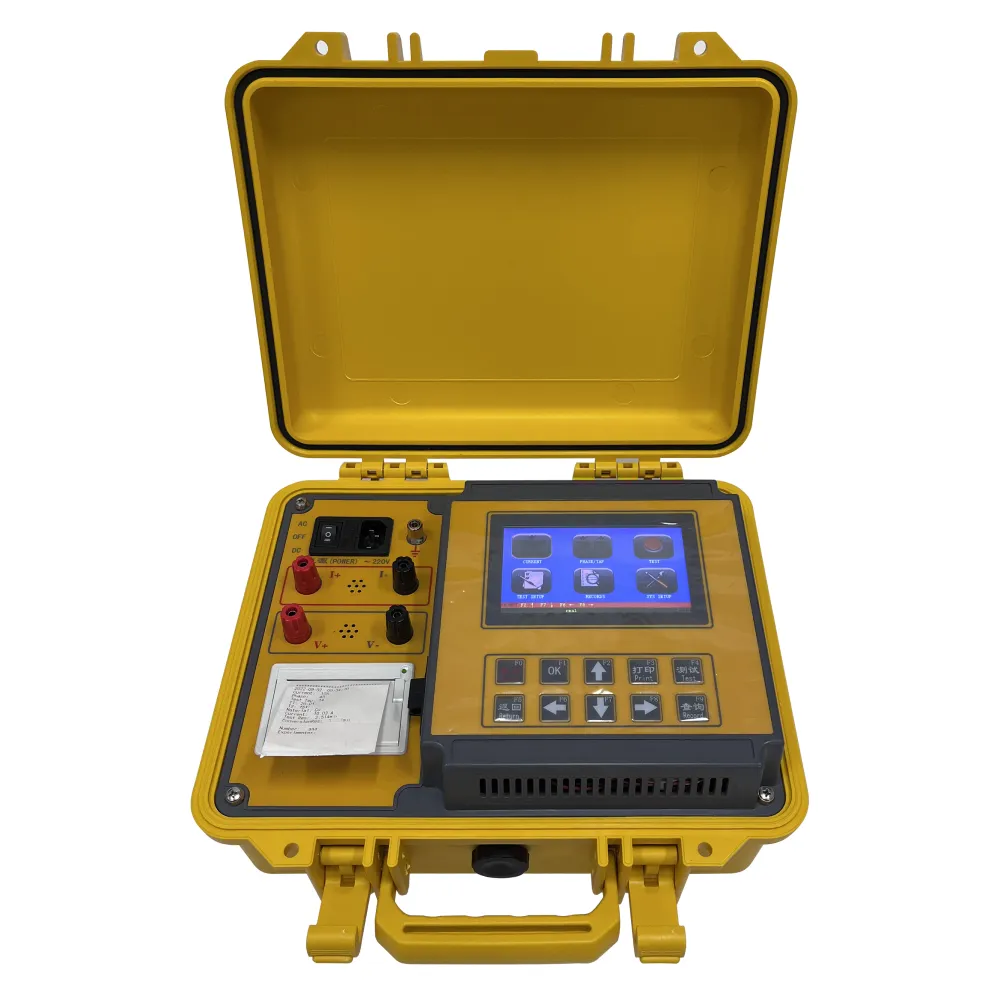
Features a large-screen, high-resolution color touch LCD, a Chinese menu, Chinese prompts, and easy operation. -
Built-in printer:
Prints and displays test data. -
Non-volatile memory:
Includes built-in memory that does not require power to retain data; stores up to 200 sets of measurement data. -
USB flash drive interface:
Equipped with a U disk (USB) interface for accessing and managing test data. -
Permanent calendar and clock:
Provides real-time clock functionality and supports time calibration. -
Performance and portability:
Wide measurement range, high precision, and good stability, with a compact size and lightweight design for convenient onsite measurements.
|
Voltage (auto range) |
15 ~ 400V |
Accuracy: ± (reading × 0.2% + 3 digits) ± 0.04% (range) |
||
|
Current (auto range) |
0.10 ~ 20A |
Accuracy: ± (reading × 0.2% + 3 digits) ± 0.04% (range) |
||
|
Power |
COSΦ > 0.15 |
Accuracy: ± (reading × 0.5% + 3 digits) |
||
|
Frequency (power frequency) |
45 ~ 65 (Hz) |
Measurement accuracy |
±0.1% |
|
|
Short-circuit impedance |
0 ~ 100% |
Measurement accuracy |
±0.5% |
|
|
Repeat stability |
Ratio difference < 0.2%, angular difference < 0.02° |
|||
|
Instrument display |
5 digits |
|||
|
Instrument protection current |
If the test current is greater than 18A, the instrument’s internal relay is disconnected, and overcurrent protection is provided. |
|||
|
Ambient temperature |
-10°C ~ 40°C |
|||
|
Relative humidity |
≤ 85%RH |
|||
|
Working power |
AC 220V ±10%, 50Hz ±1Hz |
|||
|
Dimensions |
Main unit |
360 × 290 × 170 (mm) |
Wire box |
360 × 290 × 170 (mm) |
|
Weight |
Main unit |
4.85 kg |
Wire box |
5.15 kg |