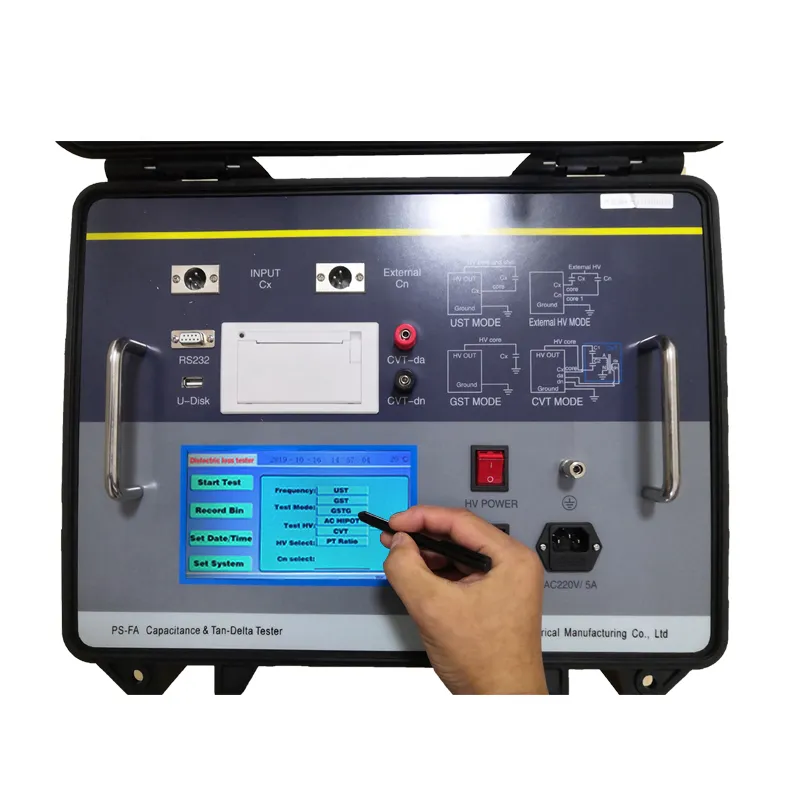
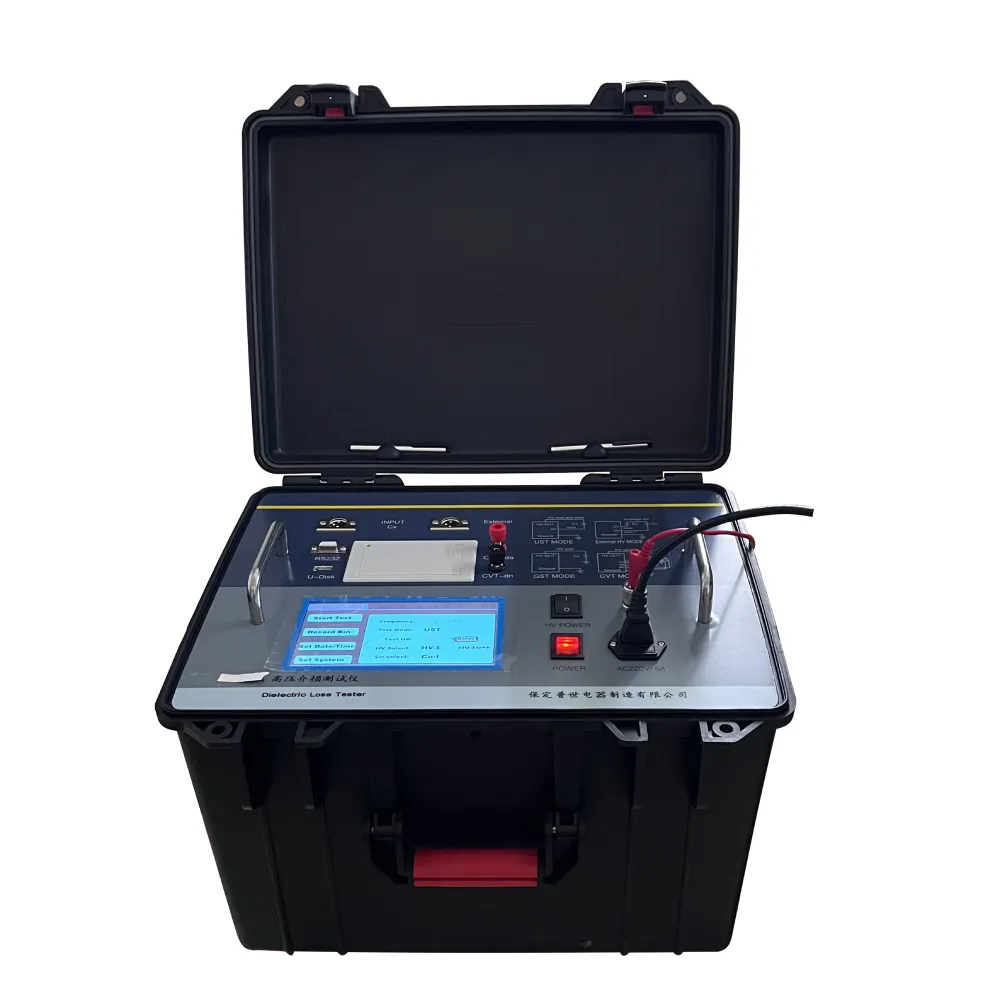
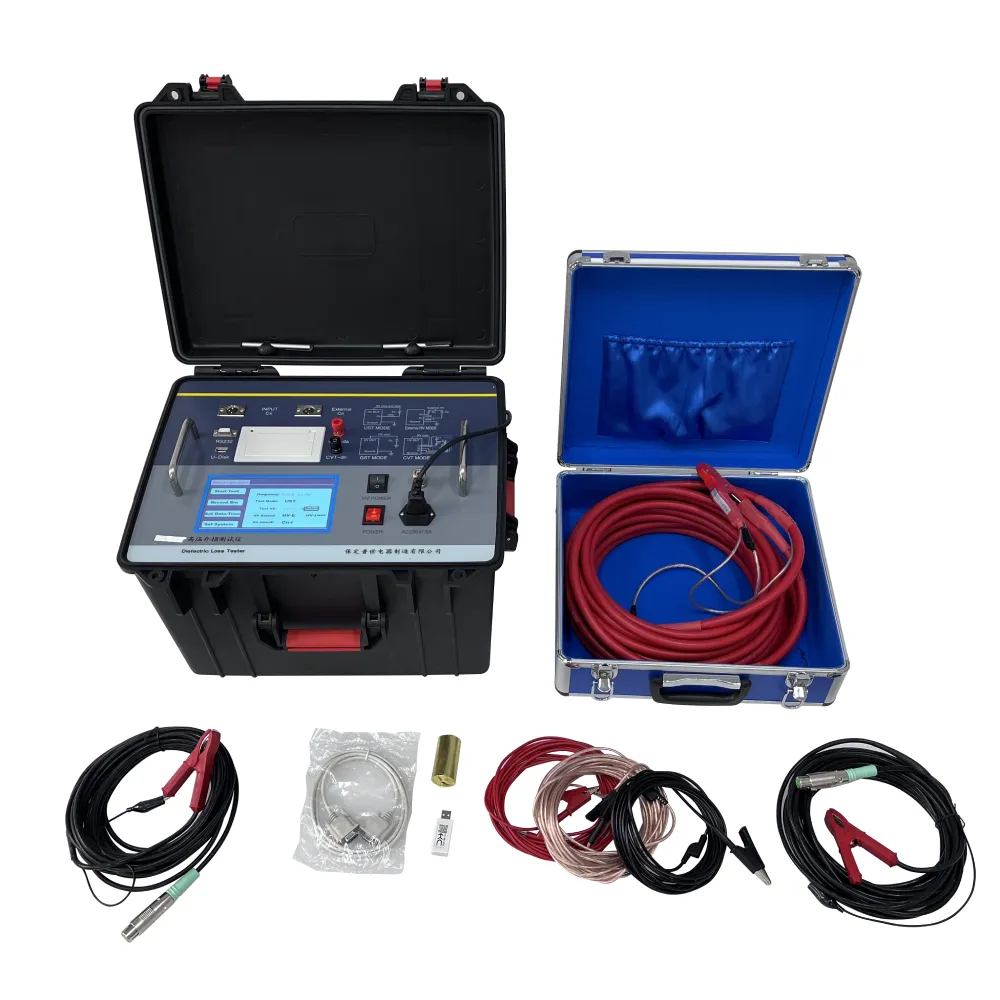
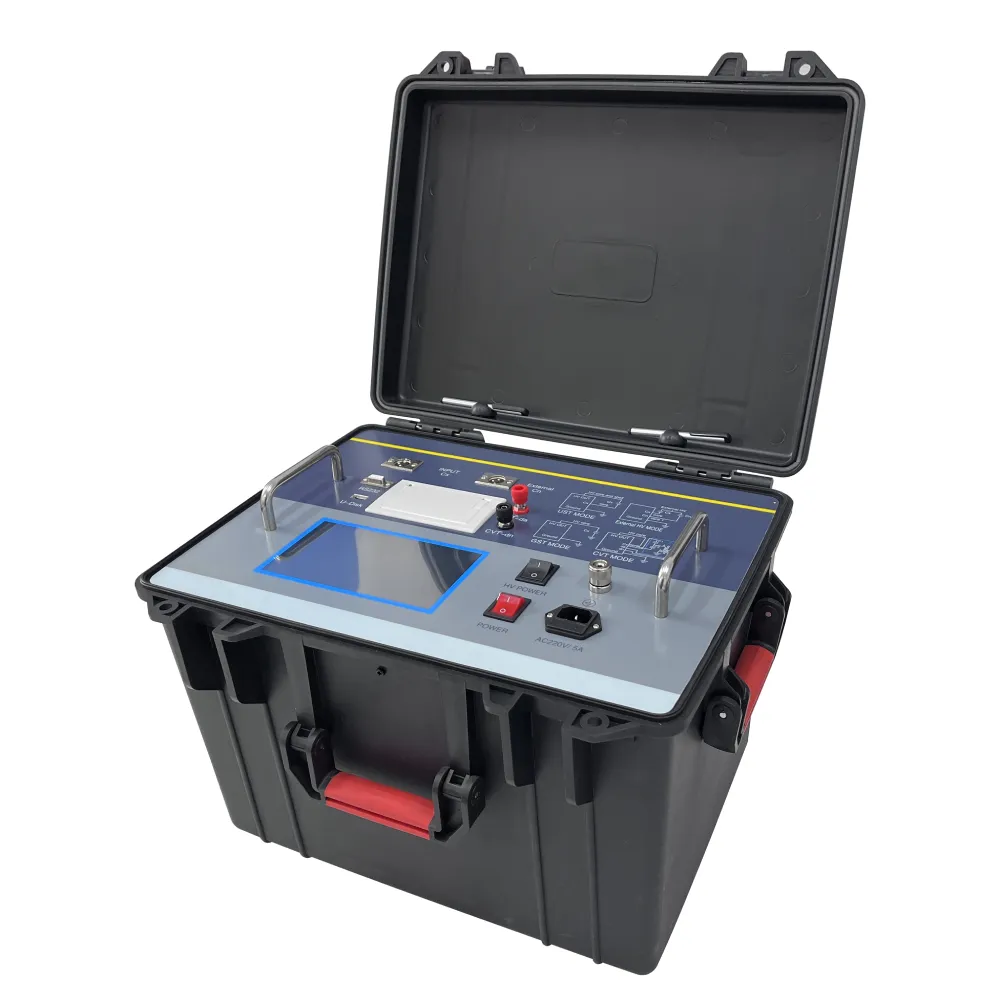
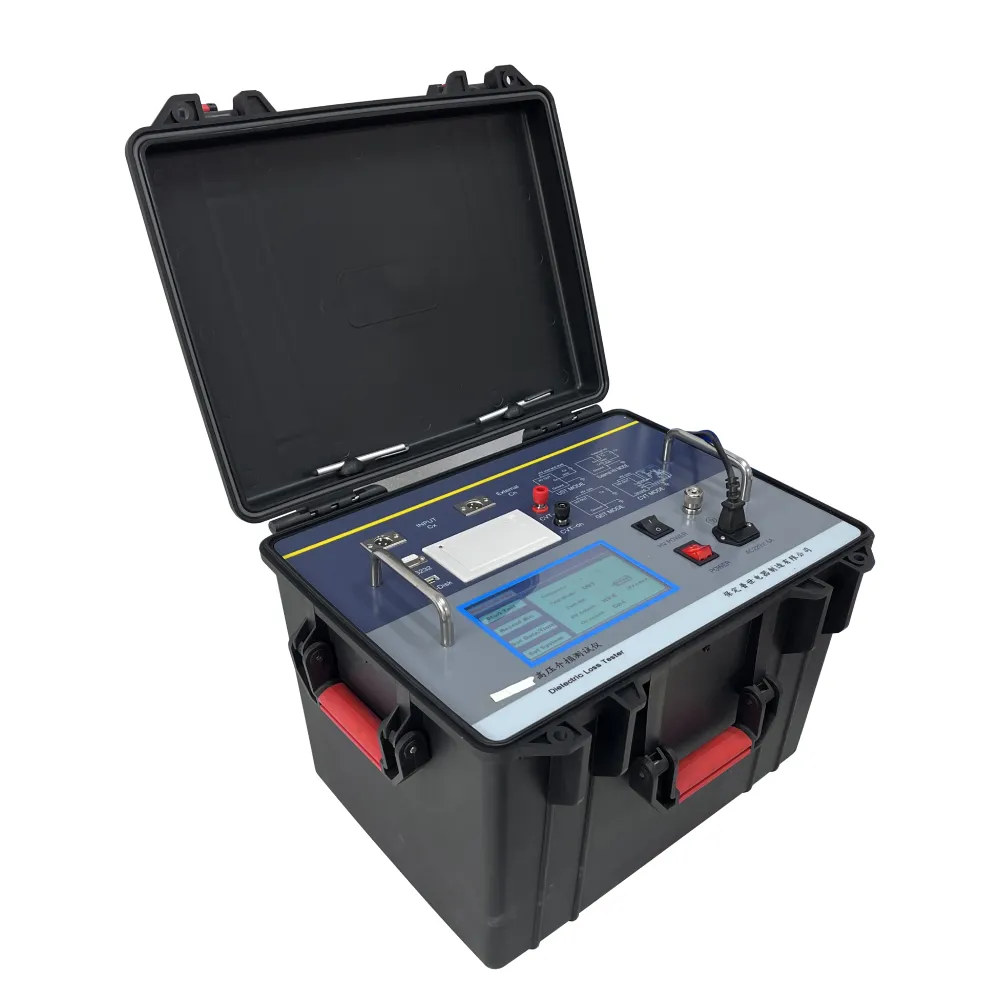
PUSH Electrical PS-JSB01 Transformer Dielectric Loss Analysis Tan Delta Tester
The dielectric loss tester uses variable-frequency power supply technology with a single-chip microcomputer for automatic frequency conversion, analog-to-digital conversion, and data processing, providing strong anti-interference performance, fast testing, high precision, automatic digitization, and simple operation. A high-power switching power supply delivers up to 10 kV and automatically filters out 50 Hz interference, making it suitable for on-site testing in environments with high electroma
- Categories:Transformer Test
The dielectric loss tester uses variable-frequency power supply technology with a single-chip microcomputer for automatic frequency conversion, analog-to-digital conversion, and data processing, providing strong anti-interference performance, fast testing, high precision, automatic digitization, and simple operation. A high-power switching power supply delivers up to 10 kV and automatically filters out 50 Hz interference, making it suitable for on-site testing in environments with high electroma
-
Core Description
The dielectric loss tester adopts variable-frequency power supply technology, a single-chip microcomputer, and modern digital techniques for automatic frequency conversion, analog-to-digital conversion, and data processing. It features strong anti-interference capability, fast test speed, high precision, automatic digitisation, and simple operation.
The power supply uses a high-power switching power supply and can provide a maximum voltage of 10 kV. It can automatically filter out 50 Hz interference and is suitable for on-site testing in environments with significant electromagnetic interference, such as substations. It is widely used for dielectric loss measurements of transformers, mutual inductors, bushings, capacitors, arresters, and other power industry equipment. -
Introduction
1. The instrument uses Fourier transform digital filtering technology to measure capacitance, dielectric loss, and other parameters. The test results are highly precise and enable straightforward automatic measurement.
2. The instrument uses frequency conversion technology to eliminate 50 Hz power-frequency interference on site, providing reliable data even in strong electromagnetic interference environments.
3. Data storage: the unit is equipped with a calendar chip and high-capacity memory, allowing you to save test results at any time, review historical records at any time, and print them out.
4. Instrument data can be exported via USB flash drive.
5. Integrated design with a standard capacitor and high-voltage power supply, convenient for field testing and reducing field wiring requirements.
6. Reverse wiring and low-voltage shielding function: Under the condition of 220 kV CVT bus grounding, the dielectric loss of C11 can be measured without disconnecting the 10 kV reverse wiring.
7. The instrument can identify the frequency of an external high-voltage power supply from 40 Hz to 70 Hz. It is acceptable to use a power-frequency power supply or a series resonant power supply for high-capacity, high-voltage dielectric loss testing.
8. CVT test function: it enables CVT self-excitation testing. You can set four protection limits for high voltage/current and low voltage/current to ensure personal and equipment safety.
9. When performing CVT testing, it can automatically measure the capacitance and dielectric loss of C1 and C2, as well as the total capacitance and dielectric loss of the CVT equipment.
10. Built-in thermal printer.
11. Computer interface: one computer can control up to 32 instruments, enabling integration into a comprehensive high-voltage test vehicle for measurement, data processing, and report output.
12. Grounding protection function and electric-shock protection function.
Accuracy |
Cx |
±(reading) × 1% + 1 pF |
tg δ |
±(reading) × 1% + 0.00040 |
|
Anti-interference index |
Frequency-conversion anti-interference; accuracy remains as stated above under 200% interference |
|
Capacitance range |
Internally applied high voltage |
3 pF ∼ 60,000 pF / 10 kV; 60 pF ∼ 1 µF / 0.5 kV |
Externally applied high voltage |
3 pF ∼ 1.5 µF / 10 kV; 60 pF ∼ 30 µF / 0.5 kV |
|
Resolution |
Up to 0.001 pF (4 significant digits) |
|
tg δ range |
Unlimited; resolution 0.001%; automatic identification of capacitance, inductance, and resistance |
|
Test current range |
10 µA ∼ 5 A |
|
Internally applied high voltage |
Set voltage range |
0.5 ∼ 10 kV |
Maximum output current |
200 mA |
|
Voltage rise and fall mode |
Set freely (e.g., 5,123 V) |
|
Test frequency |
40 ∼ 70 Hz; single-frequency setting is available (e.g., 48.7 Hz) |
|
Automatic dual-frequency conversion for 50 ± 0.1 Hz to 50 ± 10 Hz (settable) |
||
Automatic dual-frequency conversion for 60 ± 0.1 Hz to 60 ± 10 Hz (settable) |
||
Frequency accuracy |
± 0.01 Hz |
|
Externally applied high voltage |
Maximum test current during forward connection: 5 A; power frequency or frequency conversion: 40 ∼ 70 Hz |
|
Maximum test current during reverse wiring: 10 kV / 5 A; power frequency or frequency conversion: 40 ∼ 70 Hz |
||
CVT self-excitation low-voltage output |
Output voltage: 3 ∼ 50 V; output current: 3 ∼ 30 A |
|
Measurement time |
Approximately 40 s (depends on the measurement method) |
|
Input power supply |
180 V ∼ 270 VAC, 50 Hz ± 1% (mains power or generator power supply) |
|
Computer interface |
Standard RS232 interface; USB flash drive slot (automatic USB flash drive data storage) |
|
Printer |
Micro thermal printer |
|
Ambient temperature |
−10 °C ∼ 50 °C |
|
Relative humidity |
< 90% |
|
Overall dimensions |
460 × 360 × 350 mm |
|
Instrument weight |
28 kg |
|